
Revenue Is Not Real Until It Is Recovered: Why Businesses Must Act on Outstanding Payments Early
- 22nd June, 2026
- Mamtha
- 0 Comments
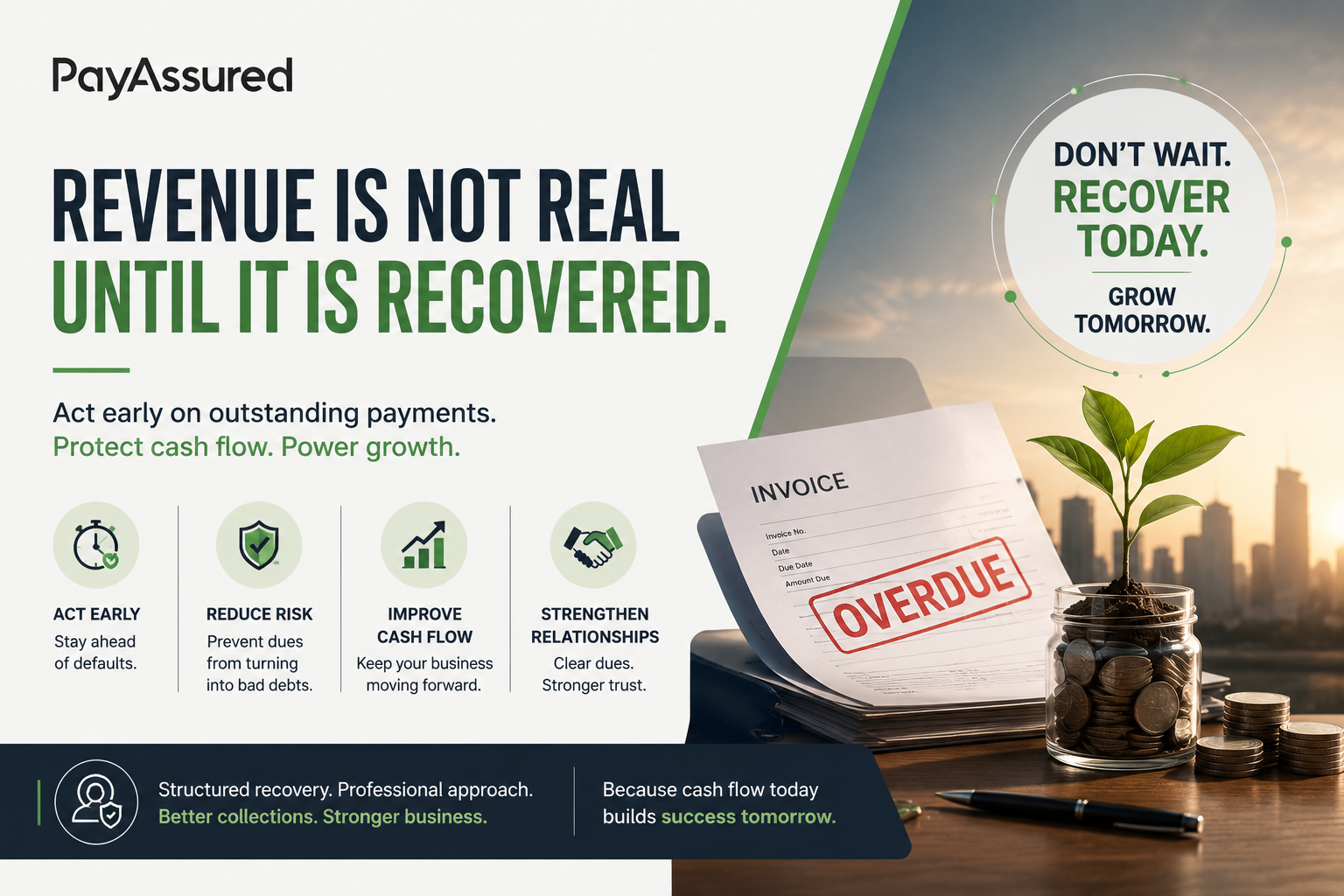
For many Indian businesses, revenue looks healthy on paper. Sales are closed, invoices are raised, GST is accounted for, and the books show that money is receivable. But the real test begins after the invoice is issued. Until that money actually reaches the bank account, it cannot support salaries, vendor payments, rent, loan obligations, purchase orders, or expansion plans.
This is the difference between revenue and cash flow. Revenue may show business growth, but cash flow shows business strength. A company can look profitable in its accounts and still struggle financially if a large portion of its money is stuck with customers. This is a common challenge in India, especially in B2B sectors where credit periods and delayed payments have become part of normal business practice.
Manufacturers, distributors, logistics companies, service providers, contractors, agencies, and suppliers often extend credit to clients to maintain business relationships. The seller completes the work, delivers the goods, raises the invoice, and waits for payment. In many cases, the seller has already paid vendors, employees, transport costs, GST, and other operational expenses. But if the buyer delays payment, the entire financial burden stays with the seller.
This is where the problem becomes serious. Outstanding payments are not just pending entries in a ledger. They are blocked working capital. They reduce the money available to run the business. They affect daily decisions. They delay vendor settlements. They create pressure on internal teams. They also force businesses to depend on loans or additional credit, even when the money is already earned.
Many businesses make the mistake of waiting too long before taking recovery seriously. They believe the client will pay soon. They continue with phone calls, WhatsApp reminders, emails, and verbal assurances. At first, this feels like a practical approach. But when follow-ups are not structured, the other side often starts treating the delay casually.
A delayed invoice becomes more difficult with time. A payment delayed by 15 or 30 days can usually be handled with proper communication. But when it crosses 90 days, the matter becomes more sensitive. By the time it reaches 180 days or more, recovery becomes harder, documentation becomes more important, and the debtor may start raising excuses, disputes, or counterclaims.
That is why early action matters. Acting early does not mean being aggressive. It means being disciplined. Businesses need to identify overdue payments quickly, document every communication, and move the matter through a proper recovery process before it becomes cold. When action is taken at the right time, the chances of recovery are stronger.
In the Indian business environment, relationships matter. Many companies hesitate to escalate because they do not want to lose a client. But professional recovery is not about damaging relationships. It is about setting boundaries. A structured approach communicates that the business values the relationship, but also expects commitments to be honored.
This is where PayAssured becomes valuable. PayAssured helps businesses move from random follow-ups to a structured recovery process. Each case is reviewed carefully. The outstanding amount, invoice history, payment terms, communication records, and debtor behavior are understood before action is taken. This helps create a recovery strategy that is professional, consistent, and legally backed where required.
The goal is not only to chase payments. The goal is to convert outstanding receivables into usable cash flow. When recovery is handled through a structured process, the debtor understands that the matter is being taken seriously. Communication becomes clearer. Timelines become firmer. Accountability increases. This often creates movement in cases that were earlier stuck.
Early recovery action also protects working capital. When businesses recover dues on time, they can pay vendors faster, accept new orders confidently, invest in growth, and reduce financial stress. It also improves internal discipline because teams begin to treat receivables as a priority rather than an afterthought.
For growing businesses, this is even more important. As sales increase, receivables also increase. If recovery does not keep pace with sales, growth itself can become risky. A company may be expanding on paper while its actual cash position becomes weaker. This is why every business needs to look at recovery as part of financial management, not just as a collection activity.
At the end of the day, an invoice is not cash. A promise is not payment. A ledger balance cannot run the business. Only recovered money can.
Revenue becomes real only when it is collected. Until then, it is only an expectation.
That is why Indian businesses must act early on outstanding payments. The sooner a business takes structured action, the better its chances of recovering dues smoothly, protecting relationships, and keeping cash flow healthy.
Because business growth is not powered by invoices alone.
It is powered by cash in the bank.


